
Festivals exist as temporary cities for one weekend a year, and usually its citizens spend a few days untethered to the usual restraints of general society.
These are spaces where normal societal rules don’t apply in the same way. And festivals are a sort of self-policing entity, where thousands of people gather under shared laws which are mutually upheld. That perhaps comes with the territory of gatherings which tend to attract liberal audiences who celebrate the more hedonistic side of life.
It’s easy to view green gatherings as harmonious utopias where everyone just gets along, but festivals need the same policing as every other major event out there, whether it’s weekend football or a national holiday.
Millions of people attend festivals each summer, and the question of how to police these fields and city centres is an ever-changing one. Theft and acts of violence can happen in the confines of a festival as much as they do in the real world. And if the worse happens, a crisis in a space running on generators potentially poses a much greater challenge than the same happening on the streets.
Festival policing is a major organisational task, too. The cost of policing Glastonbury is roughly around the £1.2m mark. There’s complicated transport to consider while city festivals mix, let’s say, energetic folks with members of the public simply going about their day.
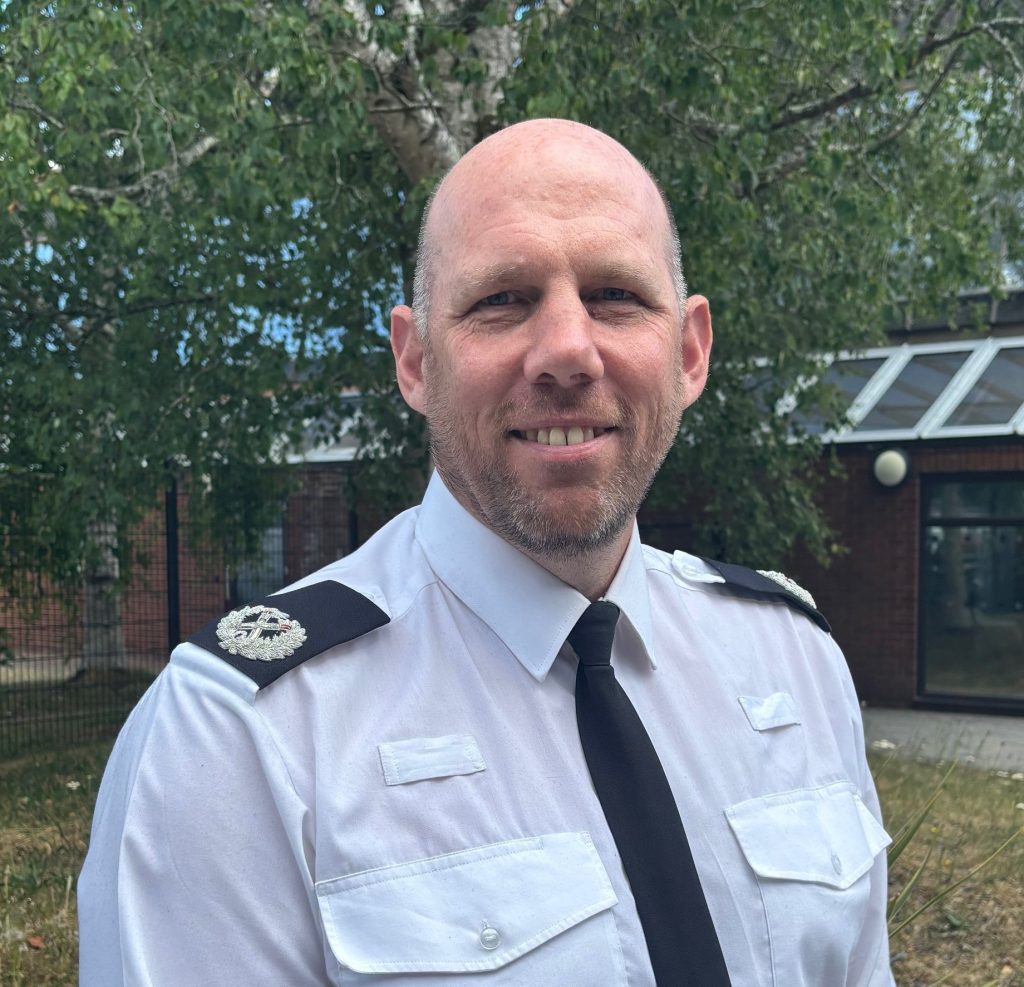
There’s lots to consider when keeping people in check, and someone who understands these challenges all too well is Tony Rowlinson, assistant chief constable of the National Police Chief’s Council (NPCC) lead for events policing.
Tony toes a unique line between ensuring festivals and events are operating within the lines while making sure police presence doesn’t overly impact people’s enjoyment. It’s a tough job, and with new legislations such as Martyn’s Law shortly coming into place, he tells us what festivals need to know about keeping people safe while keeping a free spirit.

“There’s nothing quite like festival season.
Every single year, the UK plays host to some of the biggest and best festivals, and as the national policing lead for events, I’m proud of the role I get to play in that.
To be clear, I can’t take credit for the fun stuff like which bands make the line-up. My role is much more ‘backstage’, but it’s one which is crucial to ensure hundreds of events are not only able to take place in the UK, but are able to do so safely.
You may be wondering why there is even a need for an events and festivals policing lead, or feel that our involvement would negatively impact on an event which should be about carefree enjoyment.
But the reality is that such events – particularly the more established and mainstream festivals – attract huge numbers of people to a comparatively small area, and with that comes a need to ensure thousands of different festival-goers can enjoy themselves.
I am proud that UK festivals are among the safest in the world.
In 100 festivals across the country last year there were 63 public safety incidents recorded, and 828 crimes. The most common crime types were theft and assault, with a lower number of reports relating to drug possession and supply, and sexual offences or violence against women and girls.
Given the scale of some of the events – Glastonbury alone had a capacity of 210,000 people – these figures are, thankfully, comparatively low. But what they demonstrate is the value of such pre-planning and mitigation by a huge range of partners committed to keeping people at these events safe from harm.
So, long before many of you made your way to Download or Isle of Wight this year, the planning and preparations were well underway. And make no mistake, it’s a huge undertaking with so many different people and agencies involved.
My role is to support police forces across the country to deliver safe events through a national guidance, collaboration and coordination. People travel from all over the country for festivals, and it’s so important that wherever you’re going and wherever you’ve come from, and whether you’re a seasoned festival-goer or a school leaver experiencing the rite of passage for the first time, you can be confident you’re attending meticulously planned events where your safety is our top priority.
Ahead of summer season kick-off, I met with industry leads and safety groups to discuss and plan for national challenges such as extreme heat, cost challenges and the international conflicts we hear about all too regularly on the news.
These and other challenges all impact the high standards event organisers must meet and the safety considerations they have to make, in everything from having the right levels of accredited security staff through to suitable stage builds and crowd control measures.
Those standards have increased with the introduction of Martyn’s Law.
Officially named the Terrorism (Protection of Premises) Act 2025, the legislation was developed in response to the Manchester Arena bombing, and will require those responsible for certain premises and events to consider how they would respond to a terrorist attack.
These new measures are a really important precaution and with them coming into force by April next year, we’ve been working with organisers and industry experts to raise awareness and help ensure people can introduce these important new measures as smoothly as possible.

I’ve also been working with other policing leads, in areas including drugs, public order and counter terrorism, to ensure consistent advice is being given to individual police forces and event organisers.
I know, for example, that there are many who believe festivals should offer on-site drug-testing, and indeed there is appetite from some organisers to facilitate this.
But, while policing does work closely with harm prevention partners – particularly in the drugs space – first and foremost, we must uphold the law. Policing has to be fair, impartial and consistent, so we cannot pick and choose what crimes we look at. I hope people can understand that.
There is currently no Home Office-accredited testing mechanism, and as the law currently stands anyone testing and handing drugs back to a member of the public would essentially become a drug supplier.
And so, it’s crucial that we as policing are clear in our stance and leave no room for confusion in our interpretation of the law.
We have a job to do to keep everybody safe. Drugs at events pose a risk to others – and we make no apology for coming down hard on those who see festival grounds as an ideal location to supply illegal substances.
We’re also always looking at any policing issues linked to festivals and looking at how we can be smart and innovative in how we approach them.
Hampshire and Isle of Wight Constabulary and Thames Valley Police are currently conducting the world’s first trial of roadside testing for NOS (AKA laughing gas), and so we took it as an opportunity to raise awareness and see how it could be used at Isle of Wight festival.
This was done in partnership with the event and was entirely voluntary, but the response from the public was overwhelmingly positive and supportive.
We’ve been working with the industry to develop their cyber security and help protect their systems against the growing threat of cyber attacks, and we’re also monitoring the use, capability and impact of live facial recognition and the benefits it can offer to festivals and other large events.
Festival season is now well underway, and thankfully for the vast majority these have been memorable for all the right reasons. But falling victim to a crime at an event is still a possibility.
So whether your attending Creamfields, Reading and Leeds or Boardmasters, please take time to familiarise yourself with specially designated wellbeing areas when you arrive, and be sure to speak to security staff or police officers on-site should you need help. Your safety is and will always be our top priority at events and festivals, this summer and beyond.“
The post ‘There’s a need to ensure thousands of festival-goers can enjoy themselves:’ how festival policing is changing in 2026 appeared first on Festival Insights.
