
It was in 2023 when a fire raged through the Angel Inn hotel in Midhurst, Sussex. Since then, the charred and hollowed remains of this 400-year hotel still dominates the ordinarily quint skyline of this Sussex town.
For those living in Midhurst, this once prosperous business acts as a living reminder of the plight of many small British towns and rural communities. The death of the high street or, in this case, the destruction of a town centre that relies on tourism and, by default, hotels.
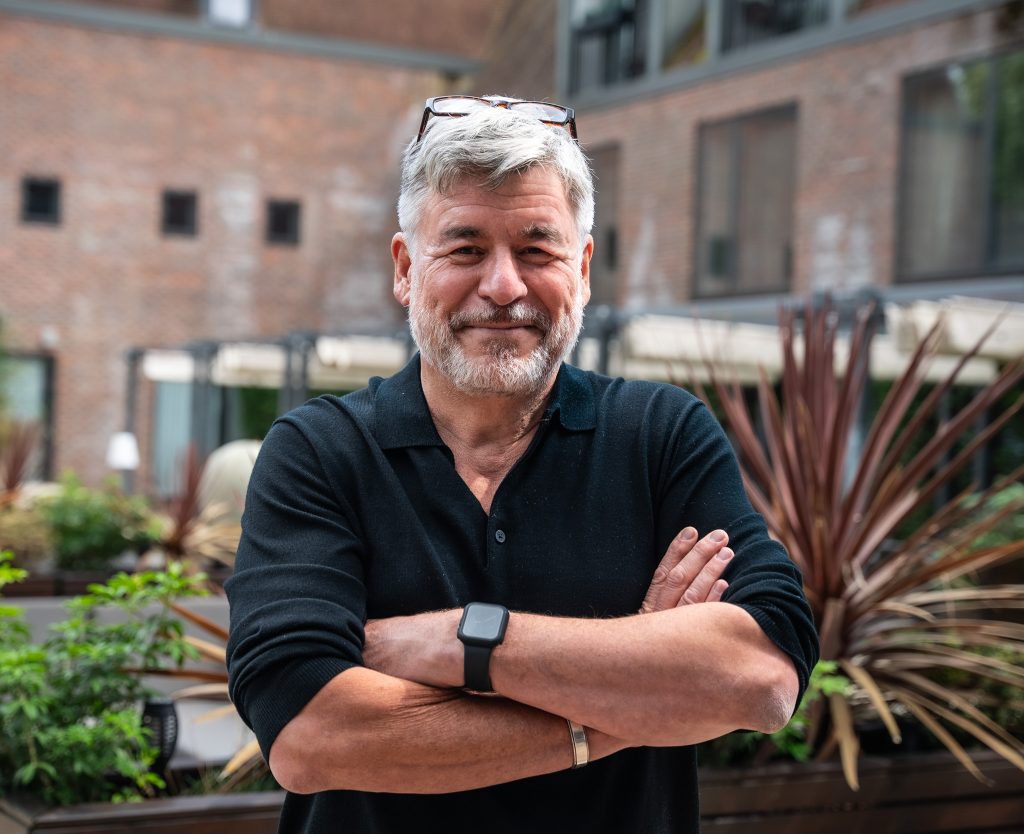
“Midhurst, like many rural towns, is a little bit on its knees,” says Adam Page, festival director of Midhurst Jazz, Food & Blues Festival (MJFBF). “It’s like having a bomb site in the middle of the high street. It’s a bit of a buzzkill.“
Adam is trying to change that through his four-day celebration of music and culture, where for one weekend a year the sound of saxophones and double bass resonates across the surrounding countryside. This year, the festival will welcome saxophonist Courtney Pine as its headliner, alongside a line-up that includes musical odes to the works of Billy Joel and the iconic London venue Ronnie Scott’s.
2026 will only mark its second year, but in that short time Midhurst is being cultivated to become a musical destination – and is changing its landscape in the process.
Adam started MJFBF through both a golden opportunity and from a past life. He spent many years in London, performing at (and drinking in) the many London jazz bars and cafés that nestle in Dalston north of the river, Brixton south of it and everywhere in-between. In his own words, Adam “fell in love with a woman from Midhurst” and decided to make it home several years ago. The town wasn’t exactly an epicentre of jazz at the time, but it provided a “blank canvas” for something new.
It may not be a fire that causes a town to be on hard times. It can be streets lined with empty shops or boarded up pubs that were once community hubs. It’s been estimated that 2,076 UK hospitality venues will close across 2026. Rural pubs and clubs are being particularly hit hard due to less footfall and tightening wallets.

For someone like Adam, running a festival that takes over a town has it pros and cons. An obvious downside to running a multi-venue festival with no venues is pretty obvious. Where you do put everyone? On that, Adam thought creatively (and pulled in some favours).
He already knows the local butcher, baker and candlestick maker, so decided to use some of their shops as makeshift venues over the festival weekend. He packs harmonica players into local stores and turns vacant spaces into workshops. Musicians from Argentina sleep on sofas while his sister-in-law becomes a B&B host for a weekend. Like jazz itself, Adam improvises.
“Creativity thrives on constraint,” says Adam, who took inspiration from NPR’s Tiny Desk series in trying to make this happen. “Tiny Desk get the biggest artists in the world, they stick them in the corner of an office and they make it work.We can do the same because we have to. Musicians adapt their performance to a wine cellar or have to squeeze a full band on a coffee shop sofa. It creates a unique performance, and musicians love it.“
In 2025, Adam estimates he welcomed around 5,500 people to Midhurst, roughly doubling the population of the town itself.
But it’s not just about shipping in tourists. The festival is part of the community itself, with free jazz Sundays events acting as a year-round meeting place for pensioners invited from the local hospice who come to share tea with new friends. “You now can’t go to that cafe without seeing a little cluster of friends who met at one of our events,” laughs Adam.
This local knowledge is key to any festival that relies on community involvement. For Adam, this advice came from Festival Republic head Melvin Benn. “Years ago, Melvin said that if you want to put a festival on in a place, you can’t just plonk it on top. It just pisses everyone off,” he says..
And this is core to Adam’s wider scope for Midhurst and what the town can be beyond one weekender. MJFBF may be a jumping off point, but Adam wants to transform Midhurst into a cultural hub 365 days a year. He’s trying to turn his town into a place where couples from surrounding areas can travel to for Saturday night jazz sessions or spend lazy Sundays listening to local acts in coffee shops. A sustainable, thriving destination.
To keep this going, Adam runs around four events per month across Midhurst, creating a year round ecosystem of expression in a tiny town. “I’m locked into this idea that if you spread culture around a town, in the end it pays off,” says Adam. “It makes culture sustainable. We want people to know there’s always something interesting going on here, and it’s not just a place where there was a huge fire a few years ago. It’s about repositioning a town in people’s minds, and slowly that works. And through a festival we can create that identity.”
“It cost me a bit of money, but it gave the festival in its first year scale and visibility that wouldn’t otherwise have,” Adam goes on to say. “To me, that’s developing audience for later years.“

But in an affluent town like Midhurst finding that audience is a blessing and a curse. It attracts those who have the money to buy tickets, indulge in the food and all that, yet may struggle to appeal to younger crowds. Or, as Andy more bluntly puts it. “There’s quite an old population here, and as Frank Zappa famously said ‘jazz isn’t dead, it just smells funny,” Adam laughs. “That’s observing that jazz tends to attract an audience over 60, and that audience is constantly dying.”
That said, a new generation of jazz is coming through. Through bands such as the Mercury prize winners Ezra Collective to Newcastle’s proprietors of ‘Geordie jazz’ Knats, the youth are getting involved. “Younger people are also moving the hell out of London, and in rural areas they’re being underserved,” Adam adds.
That said, Midhurst has some benefits not enjoyed by other towns that lie beyond the major cities. It’s picturesque, enjoys a rich history, is surrounded by Michelin star gastropubs and, for a time, was the home of H.G. Wells. But there are many other towns which don’t benefit from expansive landscapes and former homes of acclaimed sci-fi writers. For those towns, I ask, can Adam’s festival model be replicated elsewhere and across different UK high streets? And how?
“It’s vital to have that local intimacy,” thinks Adam. “You have to work out who the biggest voices are, who are the gatekeepers and all that stuff. You have to be close to the venues and be mindful of the people who own them and run them.“
Whether Midhurst will prove to be a long-term example for rural rejuvenation is yet to be seen. But, as a festival that rose from the ashes of a centuries old hotel, it’s not exactly a bad idea. “The buzz we’re creating here is incredible,” says Adam. “People now stop me in the street to thank me for an incredible festival and what it’s doing for the town. That’s always very gratifying.“
The post ‘I’m locked into this idea that if you spread culture around a town, in the end it pays off’: can a festival revitalise the high street? appeared first on Festival Insights.
