

Madrid has been on my mind lately, particularly with the wrap of the Mutua Madrid Open professional tennis tournament—one of the next bullet points on my mom’s and my bucket list tennis trips. As we look to add Spain to next year’s travel lineup, I’m digging deep into the archives to the first time I traveled to Madrid.

I was 20 years old, departing for six months in Europe alone, and Spain—specifically, Madrid, Barcelona and Valencia—were some of the first stops on my solo backpacking trip. I arrived bleary-eyed and equal parts intimidated and exhilarated, stepping into a city that felt grand, approachable, unknown. My three years of Spanish classes proved useful as I navigated art museums, siestas, salsa dancing and myriad tapas crawls, with no real plans or agenda beyond wandering.

This post is sponsored by Turismo Madrid.
Madrid blends history, culture, and modern energy in a way few European capitals do. With its bustling streets, grand architecture and lively cultural scene, it’s earned its reputation as one of the best places to visit in Spain and a must-see destination on any Europe vacation.

Top Things to See and to Do in Madrid: A Complete 2026 Guide
Discovering the best things to see and to do in Madrid requires a balance between its historic legacy and its modern energy. This 2026 travel guide highlights essential landmarks like the Royal Palace and the lush Retiro Park, alongside contemporary cultural hubs like Matadero Madrid.

Whether you are exploring the world-class galleries of the Golden Triangle of Art or diving into the local tapas scene in La Latina, these curated activities define the essential Madrileño experience for every traveler.

If I were returning to Madrid for the first time, here’s what I’d put on my must-do list.

Get lost in Madrid’s historic heart
Madrid is a walking city; you don’t “do” it so much as wander it. Start at Plaza Mayor, the 17th-century square that has long anchored the city, then stroll toward Puerta del Sol, where everything seems to converge.

From there, you’ll pass Madrid landmarks like Almudena Cathedral and Puerta de Alcalá, while the real magic lies in the side streets, where Madrid’s rhythm unfolds one block at a time.

Soak up Madrid’s art museums
Consider this your warning: Madrid will ruin you for most other museum cities. If you’re looking for the best museums in Madrid, this is where to start—and where you’ll likely spend the bulk of your cultural time. Marvel at masterpieces in the Museo Nacional del Prado, featuring iconic works by Velázquez and Goya, or take your time going through the Museo Thyssen-Bornemisza, which spans centuries of European art.

For modern masterpieces, head to the Reina Sofía (hello, Guernica), and for something more intimate, the Museo Sorolla—which will reopen in 2026 after a massive renovation and expansion—offers a glimpse into the artist’s light-filled world.
Spend an afternoon in El Retiro Park
If you haven’t experienced “siesta” in Spain, I’m about to introduce you to a way of life that really should define every country. This hours-long pause midday is meant for rest and resetting, while also avoiding the hottest time of day. In Madrid, there’s no better place to siesta than in El Retiro Park. Rent a rowboat on the lake, wander through the rose garden, or simply people-watch like a local.

Tour the Royal Palace
The Royal Palace of Madrid (Palacio Real) is the largest royal palace in Western Europe, and yes, it’s every bit as opulent as you imagine. Built in the 18th century on the site of a former Moorish fortress, it remains the official residence of the Spanish royal family—though today it’s used primarily for state ceremonies rather than daily living.

Even if you’re not typically drawn to palaces, it’s worth stepping inside to grasp the sheer scale and craftsmanship: more than 3,000 rooms, grand staircases, frescoed ceilings, and meticulously preserved spaces like the Throne Room, Royal Chapel, and the striking Royal Armory. The interiors feel cinematic, each room more elaborate than the last, offering a glimpse into Spain’s royal legacy at its most lavish.

Eat your way through Madrid
Madrid’s food culture is deeply social, deeply delicious and best experienced one bite at a time. Start at Mercado de San Miguel, where you can graze your way through jamón ibérico, croquetas, and seafood. Then move on to neighborhood bars for tapas—think: patatas bravas, albóndigas, tortilla española.


And yes, you must do churros and chocolate at least once (preferably, once a day in my opinion). It’s basically a rite of passage.

Wander Gran Vía
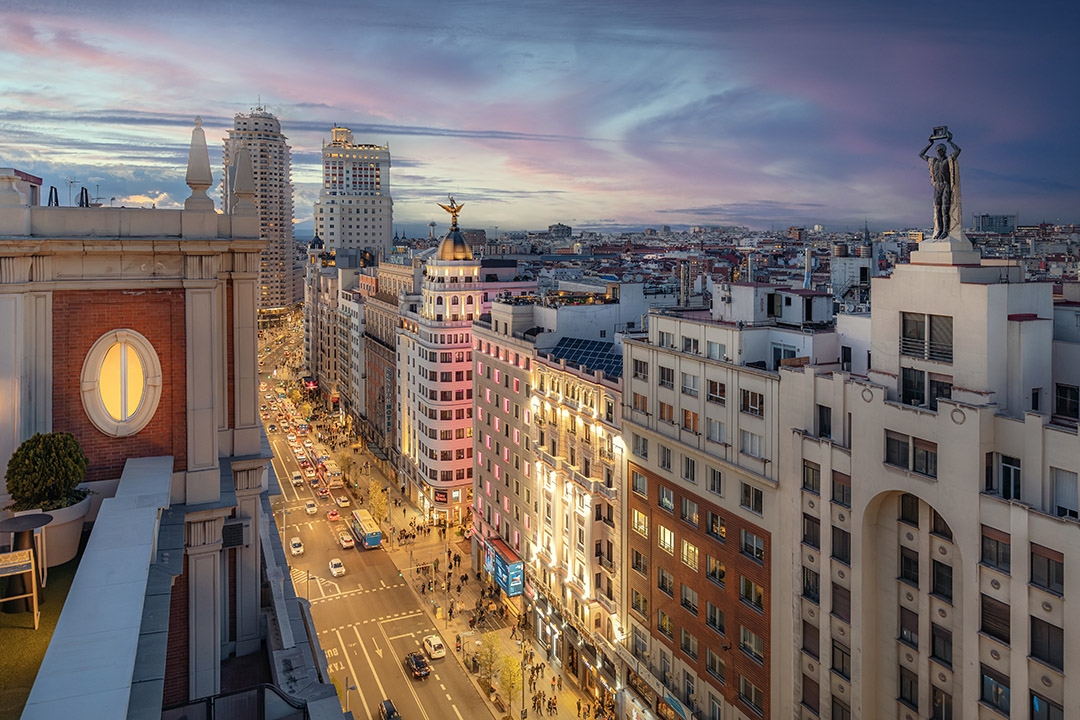
Gran Vía is Madrid’s answer to NYC’s Broadway: It’s loud, glamorous and just a little bit chaotic, both a cultural and theatrical epicenter of the city. The architecture alone is worth the stroll, all early 20th-century drama and sweeping facades.

Pro tip: Come at night if you can. The neon lights give it an entirely different energy.
Browse El Rastro flea market
If you’re in Madrid on a Sunday, El Rastro is non-negotiable. The city’s most famous open-air market has been a weekly ritual for centuries, sprawling through the streets of La Latina with hundreds of stalls selling everything from vintage clothing and antiques to vinyl records, art, and handmade goods. The main stretch along Calle de la Ribera de Curtidores is the busiest, but the real magic is in the side streets, where specialty vendors cluster (think: antiques, books and a whole lot more).
Cheer on Real Madrid
Sports are woven into the fabric of daily life here, and few experiences capture Madrid’s energy quite like a match at Santiago Bernabéu Stadium, home of Real Madrid CF. Even if you’re not a die-hard football fan, the atmosphere alone is worth it: Tens of thousands of supporters, the hum of anticipation before kickoff and a collective energy that turns a game into a cultural event.

If you can’t snag tickets, consider a stadium tour instead; it offers a behind-the-scenes look at one of the most storied clubs in the world, from the locker rooms to the trophy-lined halls. And for those curious about more traditional spectacles, Las Ventas hosts Sunday bullfights—controversial, yes, but undeniably a longstanding part of Spain’s cultural history, and still one of the top things to do in Madrid.
Take in a flamenco show
As a music lover with little to no grace in my own step, I’ve always been drawn to live dance and theater of any kind. While flamenco traces its roots to southern Spain, Madrid—Spain’s cultural epicenter—is one of the best places to experience it across every level, from intimate, impromptu performances to polished, professional productions. This centuries-old art form still thrives here, unfolding nightly in cafés, taverns, dance clubs, and world-class tablaos.
See a sunset at Temple of Debod
One of Madrid’s most unexpected sights is the Temple of Debod, an authentic ancient Egyptian temple gifted to Spain and painstakingly reconstructed stone by stone in Parque del Oeste. Originally dating back to the 2nd century BC and once located along the Nile, it was relocated in the 1960s to save it from flooding after the construction of the Aswan High Dam.

Today, this piece of the Middle East feels almost surreal against Madrid’s skyline, particularly at sunset, when the light turns golden, the reflecting pools mirror the temple’s silhouette. Come early to wander the grounds and stay as the sky fades.
Beyond the City Limits: Exploring UNESCO World Heritage Sites in Aranjuez and Alcalá de Henares
Beyond the city limits, Madrid’s central location provides seamless access to prestigious UNESCO World Heritage sites. Travelers can explore the Royal Estate of Aranjuez, famous for its Renaissance palace and expansive gardens, or visit Alcalá de Henares, the historic birthplace of Miguel de Cervantes and home to one of the world’s oldest universities. Both destinations are easily reachable via the Cercanías commuter train network, making them essential cultural excursions for any visitor seeking Spain’s authentic intellectual and royal history.
Madrid’s Culinary Scene 2026: From Historic Tapas Markets to Fine Dining
Madrid’s food scene balances tradition with modern flair—and for many travelers, eating your way through the city is one of the best things to do in Madrid. From Michelin-starred restaurants to tapas bars and century-old taverns in La Latina, the options span every style and setting. Markets like Mercado de San Miguel and Mercado de San Antón round it out, offering a chance to sample Spain’s finest tapas, cured meats and local wines.

Essential Travel Tips for Madrid: Safety, Neighborhoods, and Local Customs
Beyond the iconic landmarks, Madrid thrives as a city of experiences. Explore its emerging neighborhoods, such as Carabanchel, where contemporary art spaces, trendy cafés and local markets reveal a different side of the city. Also save time to explore some of Madrid’s green spaces like the charming Las Quintas estates—including Quinta de Torre Arias and Quinta de Vista Alegre—offering peaceful gardens and a glimpse into the city’s historic country residences.

How to Get to Madrid and Navigating the City’s Public Transit System
Navigating Madrid efficiently requires understanding its public transit system and neighborhood dynamics. Areas like Chueca, Malasaña and Salamanca offer distinct atmospheres, while local customs such as the late-night dining culture remain a hallmark of the authentic Madrileño lifestyle.


Madrid also makes an excellent base for day trips. Just a short train ride away, discover the historic cities of Toledo and Segovia, each with its unique architectural and cultural treasures. The region of Madrid is home to several UNESCO World Heritage Sites, beyond the capital’s “Landscape of Light,” including the Monastery and Site of El Escorial and the Aranjuez Cultural Landscape, exemplifying Spanish architectural mastery and landscaped gardens.
Getting Around Madrid
The vibrant center of Madrid is best explored on foot, especially if you are focusing on key places to visit. The city’s efficient public transport system makes getting around easy: The Metro connects major attractions, while buses and commuter trains extend coverage across the metropolitan area.

For official travel advice, maps, and practical tips, consult the Getting Around Madrid page or explore Maps and Essential Guides provided by the city’s tourism board.

Visitors looking to maximize their time and savings can take advantage of the Madrid City Card, the city’s official sightseeing pass. The card offers multiple benefits, including:
- Discounts at museums and other top cultural and leisure attractions
- Fast pass access to skip the lines at select popular sites
- Tourist Travel Pass included (Zone A), giving free access to most public transport in the city
- Other benefits at affiliated establishments, from restaurants to shops
The Best Time to Visit Madrid: Weather, Events and Seasonal Highlights
Madrid’s dynamic cultural life and mild weather make it attractive year-round. If you are checking Madrid or Spain weather before booking flights to Spain or comparing holidays to Spain, consider visiting in spring or fall. These seasons often offer better deals on accommodation and cheap flights to Europe, while also allowing you to enjoy shorter lines at major attractions.

Planning a return trip to Madrid
This is just a taste of all the things to do in Madrid; you could spend weeks here and barely scratch the surface. When I think back to that 20-year-old version of myself—fresh out of rural Tennessee and navigating Europe alone—I realize Madrid was the perfect place to begin. And now, years later, with plans to return on the imminent horizon, I find myself dreaming of my next Madrid itinerary, with sporting events at the center of it all.

Whether you are planning a full Europe vacation, comparing the best places to visit in Europe, searching for cheap flights to Madrid, or organizing a cultural visit to Madrid, the Spanish capital offers an unforgettable experience. For complete inspiration and official guidance, explore EsMadrid.com and start planning your trip today.

