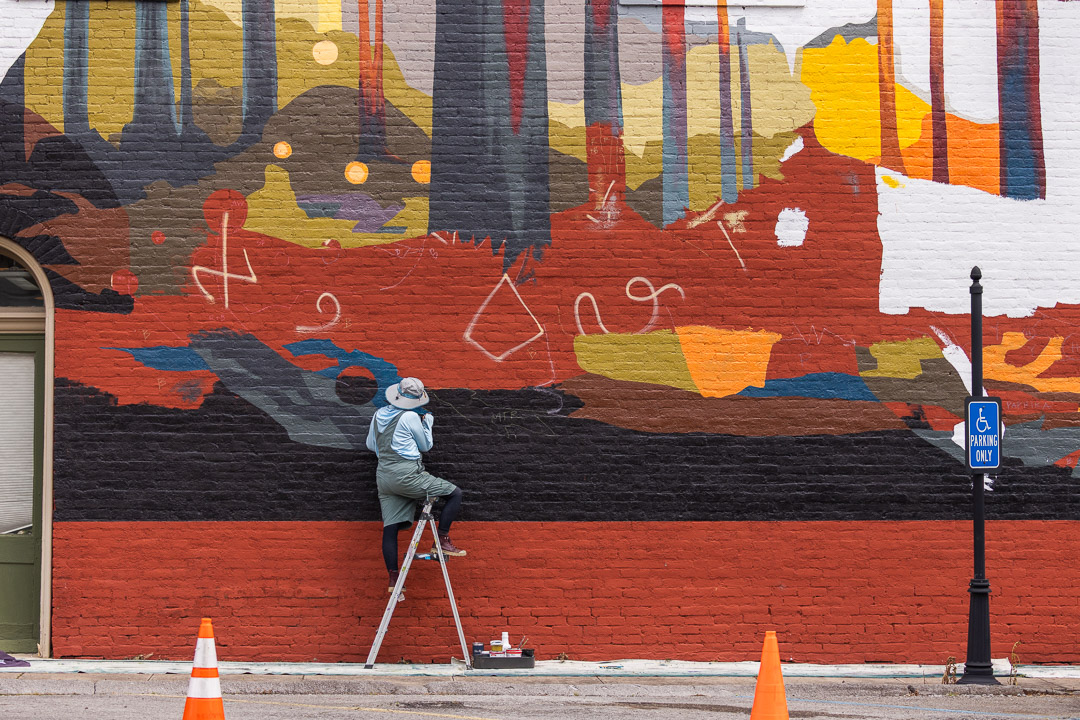

Public art can be one of the highest-impact investments a small town makes. A well-executed mural doesn’t just beautify a wall—it becomes a landmark, a storytelling tool, a piece of long-tail marketing that shows up in photos, itineraries and social feeds for years.
But the reality is most communities get the process wrong. In fact, that’s why our nonprofit exists—we work with small towns that can’t figure out how to do their first mural.
After eight years of producing murals across the South, I can say with confidence: The biggest issues aren’t creative—they’re procedural, often stemming from arbitrary rules that communities feel they have to follow.
Start Here: You Don’t Need to Overcomplicate a Project
One of the most persistent myths—especially when grants are involved—is that you must solicit multiple designs or “bid out” the creative. You don’t, unless you’re a city government with a formal competitive bidding requirement written into policy.
In most cases, grant requirements are about fair procurement—not unpaid speculative work. You can absolutely:
- Select an artist based on qualifications (i.e. RFQ)
- Commission a single artist to develop a concept (paid)
- Move forward with execution once approved
What matters is transparency and documentation, not crowdsourcing free labor.
The Two Right Ways to Commission a Mural
If you have a wall and at least a baseline budget identified, there are two professional paths forward:
1. Commission a Concept (for projects with multiple stakeholders)
Hire multiple artists to develop a design based on the wall, scope and a creative brief. This works best when there are many stakeholders that need a seat at the table.
Rather than allowing stakeholders to “design by committee,” we commission concepts from two to three artists and present them in person at a meeting, allowing stakeholders to choose which concept moves forward—not dictate the details within it.
What this includes: Hiring artists to research and develop a concept around a site-specific project.
How you should approach it: With a contract, a budget and a clear creative brief.
This is the best route when: Stakeholders need to sign off and feel included in the process before painting begins.
Once approved, you contract the chosen artist for execution. The project fee should include materials, labor, equipment and installation.
Concept development is paid work. Always.
2. Hire Based on Body of Work (for true placemaking and impact)
Just like hiring a photographer or designer, you select an artist because you trust their style.
What this includes:
- Reviewing past murals and portfolio
- Aligning on general vision, tone and subject matter
- Allowing the artist to create within their established style and voice
How you should approach it: Secure a wall and funding, then identify an artist whose body of work aligns with your vision. Reach out to the artist with specs on the wall, your budget and any parameters—then let them run with it.
This is the best route when:
- Your goal is visual impact and tourism appeal
- You don’t need multiple rounds of committee input
- You want a strong, cohesive artistic statement that is original and compelling

What NOT to Do in Mural Commissions
Communication is the foundation of any successful project, art or otherwise. If your expectations, scope and budget aren’t clearly defined from the outset, you’re setting both the artist and the project up to fail.
Avoid these common missteps:
- Requesting fully developed designs with no compensation
- Running competitions where only one artist gets paid
- Treating creative work as “exposure” or community service
- Overloading proposals with excessive unpaid requirements
A good rule of thumb: If you wouldn’t ask a contractor, photographer or web developer to work for free before hiring them, don’t ask an artist.
RFQ vs. RFP: Know the Difference
There’s a common misconception—especially among municipalities—that every public art project requires an RFP. Newsflash: It doesn’t.
In fact, in most cases, an RFP is not only unnecessary but often leads to the very issues outlined above. If you’re unsure of the distinction, here’s a straightforward breakdown, and why an RFQ is typically the better path.
RFQ (Request for Qualifications) = The right approach
- Focuses on resume, portfolio and references
- Requires minimal lift from the artist
- Allows you to shortlist—or directly select—based on proven work
RFP (Request for Proposals) = Use with caution
- Should never require completed artwork without compensation
- If design work is requested, an honorarium is essential
- Often introduces unnecessary complexity into the process
Let’s be blunt: a lot of mural RFPs are wildly unprofessional—and often exactly where a project starts to unravel.
If your RFP asks for free artwork, it’s not just inefficient—it’s exploitative. Take this RFP for example. The city that issued it is requiring unpaid concept submissions—and, on top of that, isn’t compensating the selected artists for design or execution.

For most small towns, an RFQ followed by a direct commission is the cleanest, most efficient—and, most importantly, most respectful—way to produce strong public art.
Why This Matters More Than You Think
In addition to bad karma, there’s a ripple effect to bad process. What many communities don’t realize is that experienced, in-demand muralists simply won’t apply to opportunities that ask for free creative work.
The artists you actually want—the ones creating Instagram-worthy work—opt out immediately, and word travels quickly within the muralist community. You’re left with a limited, often less experienced pool—and a reputation that can deter strong artists from engaging with your calls in the future.
Underfunded, rushed projects often result in murals that:
- lack conceptual depth
- aren’t built for longevity
- don’t hold up visually over time
This is how communities end up with a mural that doesn’t meet expectations—and assume that’s just what public art is.
It’s not.
Strong public art is the result of intentional planning, fair compensation and—listen up on this, as it’s the most important part—trust in the artist’s process. When those elements are missing, the final product reflects it.
If you want a mural that drives tourism, sparks pride and becomes part of your town’s identity, it starts with respecting the work on the front end.
Budgeting: What You’re Actually Paying For
A mural isn’t just paint on a wall. It’s a full production. It reflects years, often decades, of skill, experience and technical expertise.
Typical cost components include:
- Artist fee (design and execution)
- Materials (high-quality exterior paint and primer)
- Equipment (lifts or scaffolding)
- Travel and lodging (if applicable)
- Surface prep and priming (contractor fees)
- Protective coatings for longevity (UV or other specialty coatings)
Cutting corners here doesn’t save money; it shortens the lifespan of the piece.
Set Your Mural Project Up for Success
Before you approach an artist, have these basics in place:
- Wall secured (contract with the property owner)
- Rough budget range (this will vary based on surface, condition, wall size and complexity)
- Project goals (if tied to a specific initiative, like the 250th anniversary)
- Timeline (hard deadlines if linked to grant funding)
- Point person for approvals and communication (the more people who have to sign off on a design, the higher the price usually goes)
The clearer your framework, the better the outcome.
In Summary: Respect the Work, Get a Better Result
Public art works best when you treat it like what it is: a professional service with long-term community impact. That means:
- Paying artists fairly
- Trusting their expertise
- Streamlining your process
If you do all of these things correctly, you won’t just get a mural; you’ll gain a new destination asset, a new landmark for a town.
And in a small town, that can be the difference between a blank wall and a place people go out of their way to see.
Bottom line: Let creatives create. Pay them for their time, skill and intellectual property—and your community will be better for it.
