
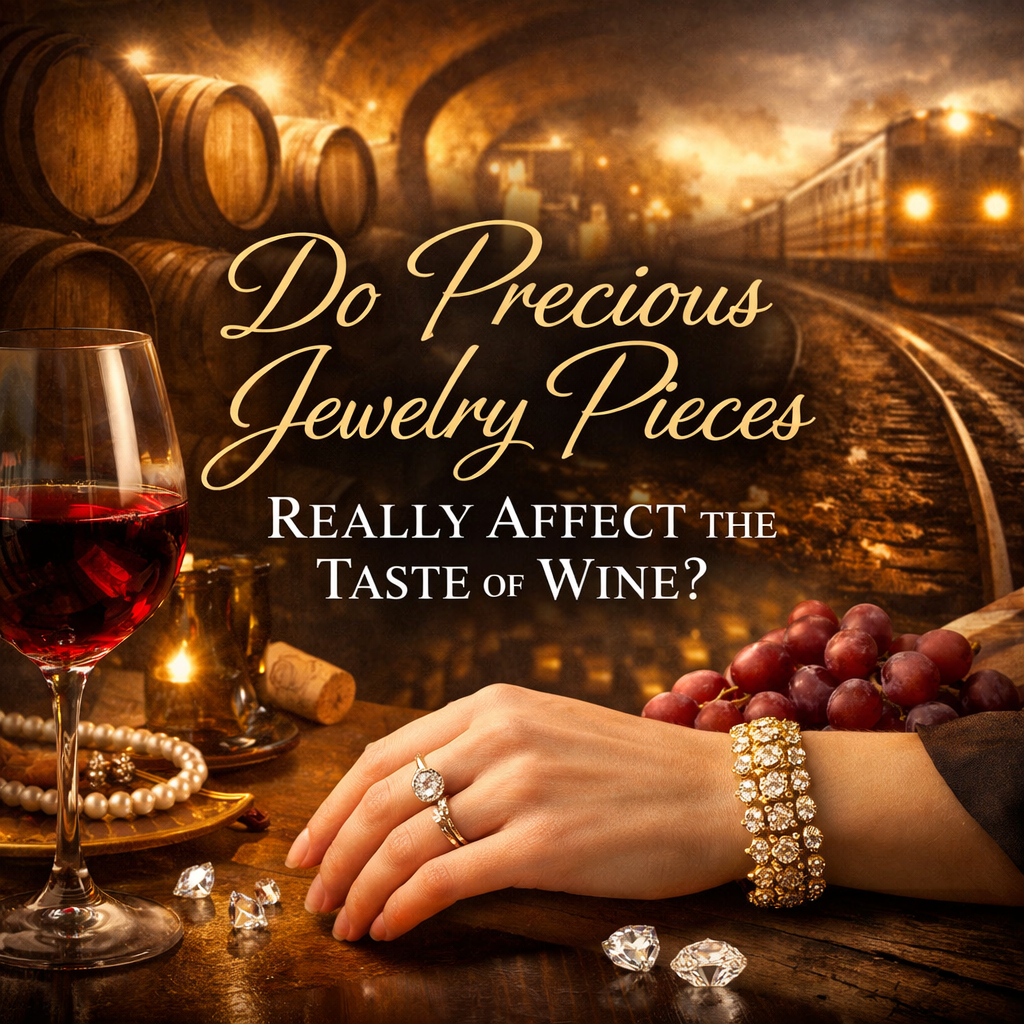

Returning home from a wine tasting, I held a bottle that had left a lasting impression. That evening, when I opened it, the taste seemed familiar, yet subtly different—shifted, somehow transformed. At first, I couldn’t figure out why.
Over time, I realized the reason: a bracelet I was wearing. Repeating the experience several times confirmed it — it truly altered my perception of the wine.
When a friend came over and I told her about this, she tried it but didn’t notice any difference. I, however, did — clearly. That’s when I understood: wine is an intensely personal experience, and not everyone can perceive the subtle edge that can change it.
What I Learned Next
After that evening, I began recalling my conversations with winemakers, trying to understand why the taste of wine can shift. Wine is a living drink, remarkably sensitive to the smallest nuances. Its character forms long before it reaches the bottle and carries a kind of imprint of time.
One winemaker shared a story that stayed with me. At a small winery where one of those memorable wines was aged, an old railway ran near the cellar. Trains passed daily at the same time. The low, steady vibrations traveled through the ground and into the wine barrels.
Year after year, no one paid it much attention. But when train traffic stopped, the new vintage revealed itself differently: the wine remained the same in grape variety and barrel aging, yet the bouquet unfolded in new ways, subtle notes emphasized differently, nuances emerging in unexpected forms.
It became clear: even what seems insignificant leaves its mark. Soil, climate, sunlight, shadows cast by clouds — every detail shapes the wine we taste.
Looking back on my discovery, I can say this with certainty: yes, in my experience, precious jewelry can truly influence the taste of wine.
